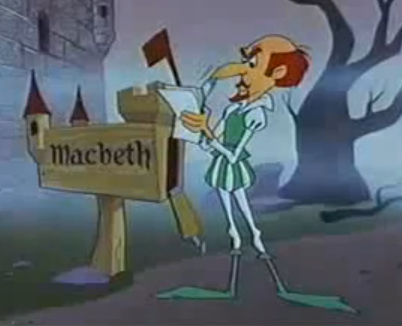
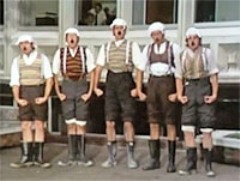
Sad stories of the death of kings, and also wacky cops

thBS7PAPPY

As of yesterday, Kentucky Shakespeare has announced its fifty-seventh season (and yes, that is one year longer than the one in that other Central Park), which includes mainstage productions of Much Ado About Nothing, Richard II and Julius Caesar. So now I’m officially allowed to talk about these scripts I’ve been working on. It’s early days yet, but the glossing and the footnoting and the punctuation tweaking and the turning of U’s into V’s and vice versa and I’s into J’s and the occasional “Ile” into “I’ll” has begun.

It’s been company habit for the last couple of seasons to work straight from the Folio and thereby allow the actors to make about 90% of the choices about what to do with that information. Most of what I do, besides making the script readable, is to correct some of the more obvious typos and misattributed speeches while leaving some of the contentious passages as they are while noting what most editors think should happen there. We must’ve done the lines that surround “parting is such sweet sorrow” five different ways in Romeo & Juliet rehearsal last summer, because why not hear how they all sound? I think good sense prevailed – the actors in question both had the wisdom to know when what they said rang true and when it didn’t – but playing it aloud is always the best test even when it just confirms what made sense on paper.

I’ll also enjoy reporting on the inevitable accidental overlaps. For example, I already know some of the thinking that went into this season. Caesar is a school curriculum show the company hasn’t done in a while and will be taken in abbreviated form to schools and parks throughout the spring; Richard II hasn’t been done in the park since the mid-‘90’s and will be the first of a long chronological run of Histories with (one hopes) as much cast overlap as the logistics of the lives of those involved allow; Much Ado has also been away for some time and it’s always wise to open with a solid crowd-pleasing comedy.

But I also noticed even at first glance that wobbly power structures are a big part of the season. This is pretty obvious in the history and the tragedy, but the whole men-know-better-than-women-oops-turns-out-men-are-primarily-idiots patriarchal angle of Much Ado shouldn’t be ignored as this theme goes. But as I say, when the whole gang digs deeper into these three plays line by line, I’m sure much more cross-hatching will appear in the season Venn.

For the rain it raineth every day–TWELFTH NIGHT, V i

This is a bit of silliness I had forgotten all about, written for a classic film blog I dabbled with a few years ago, in which I laid out the ideal cast for Twelfth Night had it been filmed by 20th Century Fox circa 1944. It belongs here as much as it did there, and it may be for my entertainment only, but that’s hardly my problem. I’m putting it here anyway. It begins with a few thoughts about the rootinest, tootinest, shootinest, Edward Everett Hortonest hombre of all time that was part of a character actor-themed blogathon and wanders off from there.

I offer no apologies: here it is.

UPDATED: I became aware as I went to bed after posting this that on that initial post years ago I neglected to included Malvolio, which would be enough of a gaffe already on a site not named after his leg coverings. I had cast him (because the choice is patently obvious) but somehow neglected to include a photo. I correct that error now. To wit:

I like to think Eric Blore would’ve finally gotten the Oscar nod he deserved for this one.

And this same progeny of evils/ Comes from our debate, from our dissension. – MIDSUMMER, II i

They’re doing another of these unwatchable, un-unwatchable presidential debates tonight (though the first two were neither presidential nor were they debates. Discuss). And it made me think of the first lines of Titus Andronicus, wherein the sons of the recently deceased emperor bicker debate about who should be in charge now. The older one, Saturninus, starts it off with this appeal, if that’s the word I’m looking for:

          Noble Patricians, Patrons of my right,

          Defend the justice of my Cause with Armes.

          And Countrey-men, my loving Followers,

          Pleade my Successive Title with your Swords.

…which sounds way too familiar when one reflects that we’re operating under a different system.

Other brother Bassianus comes in with a little more reasoned approach, actually suggesting thought instead of bloodshed, or at least before bloodshed (emphasis mine):

          Romanes, Friends, Followers,

          Favourers of my Right:

          And suffer not Dishonour to approach

          Th’ Imperiall Seate: to Vertue consecrate,

          To Justice, Continence, and Nobility:

          But let Desert in pure Election shine;

          And Romanes, fight for Freedome in your Choice.

He dies in a pit the next morning.

Fortunately, we live not in some oppressive Roman nor archaic Elizabethan era, but in a truly enlightened time.

If anyone needs me, I’ll be the one sobbing quietly under the kitchen table.

…trippingly on the tongue… – HAMLET, III ii

As Kentucky Shakespeare’s Titus Andronicus and Actors Theatre’s Macbeth continue and as rehearsals begin (with a merciful trickle, schedule-wise) for Rosencrantz & Guildenstern Are Dead, I have been thinking lately about pace and airplanes.*

For the last several summers, and for a few spotty ones before that, I’ve been part of a company that performs outdoors. (Which I’m glad we’re getting to do in this final fifteen year span of Liveable Summers before we have to hide in caves for six months of the year.) That meant something different in 1602 than it does now. Since that time, we’ve figured out airplanes, helicopters, emergency vehicle sirens, and motorcycles – or, rather, not the cycles themselves but the particular biker subset who don’t think they’re riding unless they’ve got minimum 110 db happening. Bless their hearts, in the full Southern sense of that phrase.

Fortunately, we’ve also figured out body mics, which take care of the whole overpowering-siren factor of outdoor performance, though I’m one of those who sees “necessary evil” as a two-word phrase. C’est la guerre. Not my department.

But the body mics in no way affect (my war against the non-dental use of “impact” as a verb will continue until they pry “affect” from my cold, dead hands) the holding pattern or runway option or whatever that Louisville International Airport seems to choose starting around 11:00 pm. That pattern passes right above our stage. Sometimes it seems like right above our stage. Like in the actors-getting-sucked-into-jet-engines-like-so-many-Canadian-geese sense of “right above our stage”. A few strays inevitably come by earlier in the evening as well. Planes, not geese. Also sometimes it rains.

The airplane convention the company has established is that whosoever hath the ball calls the play. So if serious doings are afoot, then everyone holds still, extending the silence they’ve created (if you understand “silence” to mean “deafening plane sound); if foolishness, then there’s more leeway. The audiences love these moments, I think precisely because they can’t be planned. Sometimes they require a little improv, like when a WWI-era Two Gentlemen of Verona servant yelled “The Kaiser!” and ducked. Sometimes what we do with the silence is enough: I particularly remember an invasion of “Pyramus & Thisbe” in which five mechanicals cowered in fear and I, as Bottom, just glared at the son-of-a-bitch pilot ruining my monologue, and also the loudest, longest train whistle I’ve ever heard popping in right after Caliban said “The isle is full of noises” to the audience’s (and cast’s) delight. He cursed that train backstage the next night when it came by late, during the next scene. “They don’t even need a laugh.”

Anyway, what the impending and inevitable strafe does affect is our pace. The show needs to be done by 10:45 at the latest or we’re going to be stopping every third word, at which point it is no longer entertaining to anyone. Which means that when I watched the Titus rehearsal the other night – which is not outdoors, though it’s almost ninety degrees here today, so it might as well be – the thing really moved for the most part even without the Tyranny of Boeing poking it in the backside with spears. And I’m pretty sure that’s because the majority of the cast, regardless of their other knowledge and experience and capabilities of self-editing, has performed under threat of airplane.

I’ll add to that the observation that sloooow Shakespeare is usually enslowenated for two reasons: 1) the belief that it will help the audience understand and 2) general hamminess. History tells us nothing can be done about 2) but I’ve listened to audiences tune out when it’s too slow and I’ve seen them lean forward when it’s just the right pace plus a little extra. They do just fine. They get rapidly accustomed to characters who talk a lot, think to themselves by talking, and even pause by talking.

This whole airplane thing, coupled with the encroaching darkness and people having to walk a little ways to their cars, also means the plays get trimmed. Which means my other personal goal, after I get people to stop verbing “impact”, is as actor and company text coach to get all our tongues tripping at the proper rate so season by season we have to trim less and less. The Kentucky Shakespeare audience is surprisingly savvy, and do not deserve to be bored for a second.

So when you hear me talking about Shakespeare Fast ™, know that I mean it in all the senses: tied tight, kept hungry…and trippingly on the tongue.


*I’m also putting together a Shakespeare performance workshop, so this sort of thing has been on my mind of late.  Cheap plug here.

Brothers, you mix… – HENRY IV Pt. 2, Vii

Tonight is opening night for the Kentucky Shakespeare production of Titus Andronicus for which I did dramaturgy, script butchery, and text coaching. Aspects of the production’s staging were inspired by Tarantino and the Coen brothers, known not only for their visions of dark comedy and cinematic violence but also for great soundtracks. Which got me thinking.

So here I propose a soundtrack for Titus Andronicus – as with most soundtracks, some of the songs hold lyrical significance, some harmonic, and some just feel right. Don’t think too hard. Enjoy! And to the cast and crew, break legs, chop hands, and have fun!

Playlist:

“Serenade for a Jive Turkey” – The Nite-Liters   (good kitchen cookin’ music)

“September Song” – James Brown   (Titus was only seven days from retirement)

“Mothra’s Song” – Emi Ito and Yumi Ito (this feels like Tamora’s theme to me)

“Sweet Revenge” – The 101’ers   (carries a bitter sting)

“Postizo” – Marc Ribot y Los Cubanos Postizos  (means “false”, also in the prosthetic sense, like “false teeth” or…)

“Wake Up Darling” – Tamara Dearing   (Lavinia had one good night)

“Mr. Bach Meets Batman” – The Explorer   (Saturninus lacked personal fanfare)

“Hide and Seek” – The Feminine Complex   (so many possibilities)

“Do It Again” – Clifford Coulter   (“There’s not a lot of money in revenge” – Inigo Montoya)

“Enumerated List of Probable Difficulties” – The Big Forgive   (it pays to have a plan, right, Aaron?)

“Who Knows Where the Time Goes?” – Sandy Denny   (after the sons of Tamora leave, before Marcus enters, there is a moment)

“Light of Rome” – The Shambles (unkind tribunes walk the sons of Titus to their trial)

“What Can You Bring Me?” – Charles Wright and the Watts 103rd St. Rhythm Band   (a hand? some heads?)

“Little Birdie” – Vince Guaraldi   (I like to think both Will and Ovid know why this is here)

“California Dreamin’” – Baby Huey   (chillin’ at dinner, swattin’ flies)

“Três Garotes” – Os Santos   (good arrow-shooting music)

“Fat Cakes” – Jimmy McGriff   (I guess food is just on my mind)

“The Hatchet Man” – The Coasters   (threatening messages to the emperor)

“Midnight” – Luz y Fuerza   (Revenge, Rapine, and Murder come to call)

“Sweet Revenge” – John Prine   (will prevail, without fail)

“Bar-B-Q” – Wendy Rene   (“I smell sometin’ in the air; you know, it smells like bar-b-q”)

“I’m Gonna Live Some Before I Die” – Faron Young   (this applies, how you say, severally)

“All Right Now” – Lea Roberts   (spoiler: Lucius takes charge)

“Ways to Be Wicked” – Lone Justice   (too on the nose? maybe – but end credits are required)

Remuneration!–LOVE’S LABOURS LOST, IIIi

I probably should have brought this up before, but here’s the deal with me and Shakespeare of late. The reason I’m writing all this nonsense.

He’s putting money in my purse.

It’s happened before, but never to this extent. Since about February of 2014, I have, depending on how you count it, been a part of either twelve (12) or fifteen (15) Shakespeare productions. Which, I am led to understand, is not normal. This immersion has been full-bodied and has left my brain simultaneously exhilarated and numbed, or if not simultaneously then toggling rapidly from one to the other. This blog is among other things an attempt to get all this down before I forget it, as the brain space is at a premium these days what with all the verse, etc.

For my own sanity and your clarity, let’s lay them out in briefest possible C.V. here:

Hamlet – An abbreviated (a redundancy when talking of Hamlet, I guess) eight-actor touring version in the spring of 2014 in which I played Polonius, the First Gravedgger, and Osric. I continued as Polonius in the full-cast version that followed as part of Kentucky Shakespeare’s summer mainstage season.

A Midsummer Night’s Dream – I finally got around to playing Bottom in my fourth time doing this play (Demetrius in my 20’s, Theseus/Oberon/Wall and Flute/Thisbe in my 30’s). A delight, even with an excessively large, musty, thirty-five-year-old ass head on. This would be the one about which I’d write my Anthony-Sheresque memoir (Bottom’s Up!, obviously). This also marked the stage debut of Oscar, my splendid toupee (named for Oscar Jaffe of Twentieth Century), on which may the iron door never be closed.

Henry V – Fluellen and the Archbishop of Canterbury. Rounding out my 2014 Summer of Yammerers.

As You Like It – a remount of a six-actor cutting I did in 2009 of this one, with commedia masks, an Old West setting, and the opportunity to play Jaques and Touchstone simultaneously thanks to dowel rod lorgnettes and a lack of shame.

Macbeth – another abbreviated touring version leading up to a mainstage remount. I want to count this one as two, though, seeing as I played Duncan/a Murderer/Doctor/Seyton/Probably someone else on tour and the Porter/Lennox on the mainstage, so I had all of about four lines overlap. Felt like a separate production to me, at any rate.

The Tempest – Stefano, with a large sweat-absorbing prosthetic belly and probably more rouge wine blossoms than strictly necessary. 2015 was the Summer of Entering From the House, what with Stefano’s shanties, the Porter’s crowd-climbing/-accosting and…

The Taming of the Shrew – …Petruchio’s big wedding entrance. I had the honor of playing opposite my wife for this one. Saving that for a post of its own. Or the book. (Oscar was in this one, too.)

(I should note here that for the previous three productions I was also company dramaturg/text coach because I suggested that one would be helpful and that it should be me. I seem to have inadvertently pulled some sort of Jedi Mind Trick on the Artistic Director, because it happened. This continued to be true for the following Kentucky Shakespeare shows.)

Twelfth Night – Malvolio, this time opposite my wife’s Olivia. Another pleasure, and, like Bottom, one I had been waiting to sink my teeth into for a long time. I have a much better Yellowstocking Tale from a trip to Stratford-upon-Avon, but again, another post. This was on Twelfth Night itself (and the evenings surrounding), blessedly indoors instead of on the magnificent-in-summer-but-uncomfortable-in-January stage in Louisville’s own Olmstead-designed Central Park.

Two Gentlemen of Verona – Another pairing with my wife, who was Speed to my Launce. Maybe pairing is the wrong word because of the lovely Hope (Crab), who stole most of our laughter, applause, attention, and pride, which is the way of this show and I suspect has always been. I also got to write the setting of “Who is Silvia” for this production. (I played Proteus in college in the 90’s, in the days when all my hair stayed attached to me after the show.)

The Winter’s Tale – Polixenes. What a weird role. What a weird play. I love it dearly. But I defy anyone to deny its weirdness. Unlike anything else. Also a thoroughly justified appearance by Oscar in Act I. And another setting, this time for Sonnet 97 (“How like a winter hath my absence been”) as sung by Mamillius.

Romeo and Juliet – Friar Lawrence. July 2016 being the hottest month in recorded history (until August), it was nice to balance out Launce’s 1919-ish three-piece suit with the updrafty Medieval caftan of Polixenes and the monkish robes of the Friar. Such a pure functionary, which is a great thing to get to play. You’re not going to steal any scenes (or you shouldn’t) because the audience really only deeply cares about two people. So join them, I say. (I was also the dramaturg/text coach for the spring tour of this one, as well as being responsible for the cutting, which was a bit of work and makes me want to count this one twice as a bonus, maybe.)

Titus Andronicus – a Kentucky Shakespeare fall rarity. Previously mentioned in gory detail here. Purely behind the scenes on that one. It opens Thursday.

Macbeth Again – So much Macbeth, this time at Actors Theatre of Louisville until near the end of this month, with a small role that provides plenty of knitting time and time to cobble together this Shakespeare workshop I’m teaching soon.

Purely onstage, that makes twelve (12) productions and in the neighborhood of twenty-two (22) speaking roles large and small over the space of two years, eight months. Somewhere in that time I’ve also finished two separate cuttings of Julius Caesar for next spring/summer, a cutting of Antony and Cleopatra that I think conceptually brilliant but have yet to convince anyone else of (or try terribly hard yet, honestly) and a fair heap of preliminary leg work on another yet-to-be-announced play for 2017. And the trip to Stratford!

I’ve done other things in there (three or four plays from the last hundred years and an understudying gig, probably ninety or so audiobooks recorded, a reasonably major intestinal surgery), but none so connected to each other that they made me want to dedicate an entire blog to them just to clarify my thoughts and tangentially drag other people along for the ride.

So when I seem loserishly footstuck in the Jacobean mires of the rules of performing verse and so on, please remember it’s all I’m allowed to think about. If I didn’t keep a blog, I’d just turn my brain off and play Assassin’s Creed some more and what would that accomplish? (Although a Macbeth or Henriad edition would kick ass. Think on it, Ubisoft. “There’s not a one of them but in his house I keep a servant fee’d – this one’s name is MacGregor. He’s an Assassin.”)

And when I mention one or another of these productions (and I think I’ve at least mentioned every Shakespeare I’ve ever done – wait, no: another Twelfth Night, an Othello, a Richard III, and a college Much Ado About Nothing) eventually in this furious jumble of bloggery, I’ll be able to find them here.

Thanks for the indulgence.
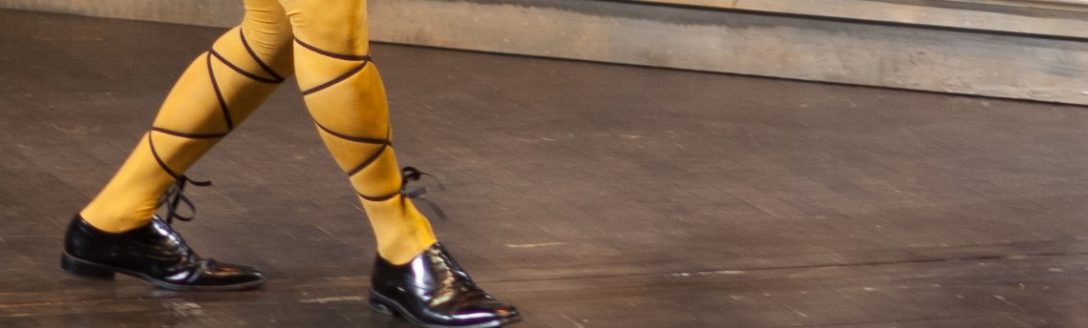
And take upon’s the mystery of things/ As if we were dog spies–KING LEAR V iii (via Hanna-Barbera)

That last post about the sleepwalking scene reminds me of a brief story…

So we broke my nieces a while back. My sister’s girls are eleven and seven (before you ask, Stranger Things and Trek fans, not Eleven and Seven) and have for the last three summers been coming out to see us at Kentucky Shakespeare in the glorious, sticky, open air of Louisville. They’ve seen roughly a dozen from the canon already. (The eldest has a poster with all the Arden edition covers on it in her closet, on which she ticks them off as she sees them.)

They have normal childhood loves, too. LEGO. Horses. Supergirl. Scooby Doo.

My sister occasionally indulges in what I believe is a common parenting activity she calls “pretend bonding”, which involves getting the dishes done or what have you while pretending to care deeply when the youngest recounts the plot of her most recent Scooby viewing. On one particular episode last fall, Danger-Prone Daphne seems to have gotten herself hypnotized (I seem to remember an evil ghost clown being involved in that one; unfortunately timely) and was walking about in a daze – or, as the young’un, six at the time, put it, “her eyes were open, but their sense was shut.”

To which my sister justifiably replied, “What?”

“You know, like she was sleepwalking.”

“Uh-huh.”

We broke the nieces.

…pardon me, I do not mean to read…–JULIUS CAESAR, III ii

And pardon me while I get more specific than is ever necessary.

I offer two solid reasons to witness and not to read Shakespeare. Which is to say, obviously read Shakespeare, but not silently, and if possible not alone. Three measly lines from two consecutive scenes in Macbeth.

1) It’s not the most important moment in the play by any means, but the Doctor and the Gentlewoman in Macbeth, V i, have this exchange while they witness the sleepwalking Lady M doing her thing and nattering on about dead women and manual hygiene:

          DR: Go to, go to, you have known what you should not.

          GW: She has spoke what she should not, I am sure of that. Heaven knows what she hath known.

I’ve seen and done this scene repeatedly. And there are options about the basic meaning of it the script doesn’t really help with – no stage directions here, and most of the scene is in prose, so even the rhythmic clues are more up in the air. (You could argue that the Doctor’s line is in verse, but you could also argue it ain’t.)

So, options. You’ve got:

          DR: [to the sleepwalking Lady M, whom he knows can’t hear him but has just maybe revealed herself as at least accessory to murder] Go to, go to, you have known what you should not.

          GW: She has spoke what she should not, I am sure of that. Heaven knows what she hath known.

That choice is difficult even to paraphrase in brief – hitting the verbs seems to do all the work – and is therefore the one I like most. But you’ve also got:

          DR: [to the Gentlewoman, who has just heard Lady M maybe reveal herself as at least accessory to murder] Go to, go to, you have known what you should not.

          GW: She has spoke what she should not, I am sure of that. Heaven knows what she hath known. [I.e., “Don’t blame me for hearing it; plus if anyone here has known what she should not…”]

OR, maybe:

          DR: [to himself, having heard Lady M maybe reveal herself as at least accessory to murder] Go to, go to, you have known what you should not.

          GW: She has spoke what she should not, I am sure of that. Heaven knows what she hath known. [I.e., “Don’t beat yourself up, fellow non-royal. These people are clearly a mess.”]

I’m sure there are others, but I imagine they fall under these three umbrellas.

Buried in all this is how much I love the juxtaposition of the plain-spoken Gentlewoman and the Doctor, who starts out trying to sound impressive in jargony prose (“In this slumbery agitation, besides her walking and other actual performances, what, at any time, have you heard her say?”) but eventually is beaten by horror into verse that’s clear, terrified, and caring:

          More needs she the divine than the physician.

          God, God forgive us all! Look after her;

          Remove from her the means of all annoyance,

          And still keep eyes upon her. So, good night:

          My mind she has mated, and amazed my sight.

          I think, but dare not speak.

A thoughtful dynamic for two characters we’ve never seen before and who frankly we don’t need but would miss if they were gone. But back to the topic at hand.


2) This one is a tad more famous, relatively. In the scene before the sleepwalking, Macduff (IV iii) is told (400-year-od spoiler) that Macbeth has killed the entire Macduff household. Among his responses is the great line, “He has no children.”

The hell does that mean? “He”? “He” Malcolm, who just told Macduff to chill, and obviously couldn’t say such a thing if he had children? “He” Macbeth, who couldn’t imagine murdering children if he had any of his own? “He” Macbeth again, who (even though Macduff wouldn’t really linger too long on thoughts of such an act) prevents proper and equal revenge by not having any family for Macduff himself to kill? “He” Macduff himself, who suddenly has to try on the giant robes of widowerhood and hears in his head how pitying people will be describing him now? All of those? Some? One?

No help from the script at all, Silent Reader. An actor will pick one; a Reader Aloud can toy with options. All of them can work. But there’s work to be done.

Man, I love this stuff.

…what stern ungentle hands/ Hath lopp’d and hew’d… – TITUS ANDRONICUS, II iv

Yes, yes, last night was the first audience for Actors Theatre of Louisville’s Macbeth, but next week Kentucky Shakespeare’s Titus Andronicus will also open, for which I did the dramaturgical leg work, which is to say providing text coaching for the cast and butchering the script down to a honey-baked ninety minutes. I’ve asked myself fairly often in the last couple of months whether referring to my cutting work on this particular play as “butchering” or any of the other gruesome jokes the story inspires will ever cease to amuse me and the answer thus far seems to be a resounding “No; no, it won’t.”

I teeter between being a let’s-do-the-whole-thing-uncut-at-proper-speed-in-tights-won’t-it-be-glorious purist and an if-Orson-could-put-it-in-a-blender-so-can-I scissorhanded madman. My goal, in latter mode – and I’ve always been given either a required maximum running time or a significantly reduced cast size in these cases – has always been not to break the poor thing’s spine, but to adapt to the circumstances.

For example, when I was hired for Titus, I was told a) ninety minutes and b) modern mafia/Tarantino setting. (It will be performed in a storage warehouse – floor drains! – behind a gay bar in an area of Louisville known as Butchertown*. Writes itself.) So knowing that the space will be that intimate, when I cut for time I can take liberties with some lines like Marcus’s

          Alas, a crimson river of warm blood,

          Like to a rosy fountain stirr’d with wind,

          Doth rise and fall between thy rosèd lips,

          Coming and going with thy honey breath.

That’s lovely, but if something has to go, let it be something describing a visual to the cheap seats, seeing as we’ve eliminated the cheap seats and put everyone up close. They will notice the blood pouring from her mouth and Marcus still has plenty to say about it. In a perfect world I’m able to leave a stage direction to replace what’s been excised. If the beautiful pentameter provides useful info for the way the actor is being told by the text to respond ( “Gee fellas, I’m almost crying” is restated about eighty ways in the Folio) I’m careful about leaving that information in the right place even if the seven lines telling her to almost-cry are gone.

Beyond that, there’s the setting. Titus in this case is not just being played in a 21st century warehouse behind a club; it’s more or less set in one. So instead of shooting mean-spirited message-laden arrows around to make Titus’s feelings about Saturninus known, the same story point is made by visual means. (I won’t say how just yet – you’ll have to see the show if you’re in town.) And in some cases, the Tarantinocity is sold with soundtrack choices that do the job some of the language did before. And lots of blood. Did I mention blood?

The following is both preciously obnoxious and utterly unexaggerated. I have occasional conversations with Will about my choices. I try not to have them aloud for my wife’s sake, but I have them. The Will in my head is not a dainty poet. He’s a playwright whose shameless prime interest is in people liking his show. And if I have to explain to him changes in stagecraft over the last four centuries, so be it.

Me: They can’t just pee against the wall anymore, you know; they have to line up.

Will: Then by all means let’s put a bladder break in here for the sake of their attention.

Me: Great. Now, we’ve reminded them of this bit of info four times now. The people are all facing the stage, there’s a spotlight on the actor, they’ve paid $20 a pop and almost no one in the balcony is soliciting a prostitute. How about we cut two of the reminders?

He almost always understands. Then I have to explain electricity and economics, and it’s this whole thing, and I have to make him go away until I need him again.

(For the record, he looks exactly like Sam Crubish from the Bugs Bunny cartoon “A Witch’s Tangled Hare” (1959) co-starring Witch Hazel, but with darker hair. This, too, is utterly unexaggerated.)

I don’t feel nearly as bad about judicious prunings like this in a script like Titus, which like a few others is primarily a Plot Being Told and not, like say Winter’s Tale, a kind of opera, in that the story can be quickly summarized and much of the point of the evening is vamping about what’s going on in the characters’ emotional innards. Not that the innards aren’t important in Titus. (NEVER GOING TO STOP AMUSING ME.)

That’s your unasked-for glimpse into what I’m thinking when I go about these little enterprises Irving called, as I believe I said on here somewhere before, “arrangements”. Of course, Irving had his Macbeth wig arranged so it would “unfix” as the text demanded (if that’s really the word), and I’m just some over-read Midwestern actor with a blog, so. Grain of salt.


*and if anyone from Play, the bar in question, is reading this and is interested in an idea I have for a hilarious gender-bent Moliere adaptation to be done on your really splendid and enticing drag stage/runway, contact me. It would be brilliant.

Nay then, God buy you, an you talk in blank verse.–AS YOU LIKE IT, IV i

Actors, especially of Shakespeare, will probably be bored by the following. For audiences/readers of Shakespeare, this may be interesting. I don’t know.

There’s a time in Shakespeare (any?) rehearsal where Job #1 is figuring out What on earth it is exactly that you’re even saying. Then usually comes the Why. Then, ideally, choosing a How that aids audience understanding of the What/Why. Anything that comes after is gravy or fight choreography. More fun.

Mingled in the What/Why/How somewhere is the poetic stuff, which should ideally be scarcely noticed by the audience but which should be tremendously helpful to the actor. I’m not going to get all jargony, but I’ll use one of the less famous and vital lines in Macbeth (II iv):

          Threescore and ten I can remember well; within the volume of which time I have seen hours dreadful and things strange; but this sore night hath trifled former knowings.


That’s the pure sentence version, which isn’t too tough to figure out  – “I’m old and I’ve seen a lot of crazy shit in my day, but tonight made all that look pale.” Done. Old Man’s thought expressed; Ross’s turn to speak; Macbeth and the rest have some time to change out of their nightgowns, Macduff has time to pack a train case for Fife.

Now, some actors insist that’s plenty. Basic punctuation and word definition is all they need from a script. (I suppose there are also some singers and conductors that figure all those extra marks Mozart cluttered his page with that weren’t actual notes can be ignored, but I’m not an opera expert.)

If we were to write it out as it appears in verse it looks more like this:

          Threescore and ten I can remember well;

          Within the volume of which time I have seen 

          Hours dreadful and things strange; but this sore night

          Hath trifled former knowings.

And that’s different. Beside the old “da DUM da DUM da DUM da DUM da DUM” (with variations) business that helps with the intended rhythm (WithIN the VOLume OF which TIME I have SEEN), there are those lovely, pesky mid-phrase turnarounds at the ends of the lines (seen/Hours, night/Hath). Some people feel like pausing to let those be heard makes for a distancing Ye Olde-ness, yet those same people often put in “naturalistic” pauses willy-nilly just as they do in a standard contemporary play.

But.

I’m of the firm opinion that as the years went by and he got ideas about this whole verse deal Shakespeare was trying to have and eat the cake – stylized lines that also sounded like a person was thinking them up as she went.

So to over-explicate the previous:

          Threescore and ten I can remember well; (chew on THAT for a minute, youngster)

          Within the volume of which time I have seen  (I’ve seen a lot – how shall I narrow this down?)

          Hours dreadful and things strange; but this sore night (I’m going to have to make up a word used nowhere else in these plays to express this)

          Hath trifled former knowings.

Then Ross pipes in with his usual Debbie Downer action. How is it that people don’t just break into a run when they see him coming? Even on the rare occasion when he brings good news (I ii), he makes you dangle for it:

DUNCAN: Whence cam’st thou, worthy thane?

ROSS:                         From Fife, great King,

Where the Norweyan banners flout the sky

And fan our people cold.                                  (Half-line. He’s making us wait for it.)

Norway himself, with terrible numbers,

Assisted by that most disloyal traitor,          (I know, kid; I know who we’re fighting.)

The Thane of Cawdor, began a dismal conflict,   (Yes,  yes, hence the report,. Did we win?)

Till that Bellona’s bridegroom, lapped in proof,

Confronted him with self-comparisons,

Point against point, rebellious arm ‘gainst arm,

Curbing his lavish spirit; and to conclude,       (DID? WE? WIN?!)

The victory fell on us –


I should note that pausing isn’t what I’m talking about – these plays are plenty long enough as it is to the 21st century bladder– but light thought-hiccuping just as you do, just as anyone does when speaking aloud while figuring out what word comes next.

This is why actors get all fancy about doing Shakespeare. We’re putting in extra brain work that taxes the sort of person who goes into this business a bit more than the usual emotional/physical gooiness that is our stock-in-trade. Be gentle with us. Our brains, like those of Dr. Gumby’s patients, hurt.