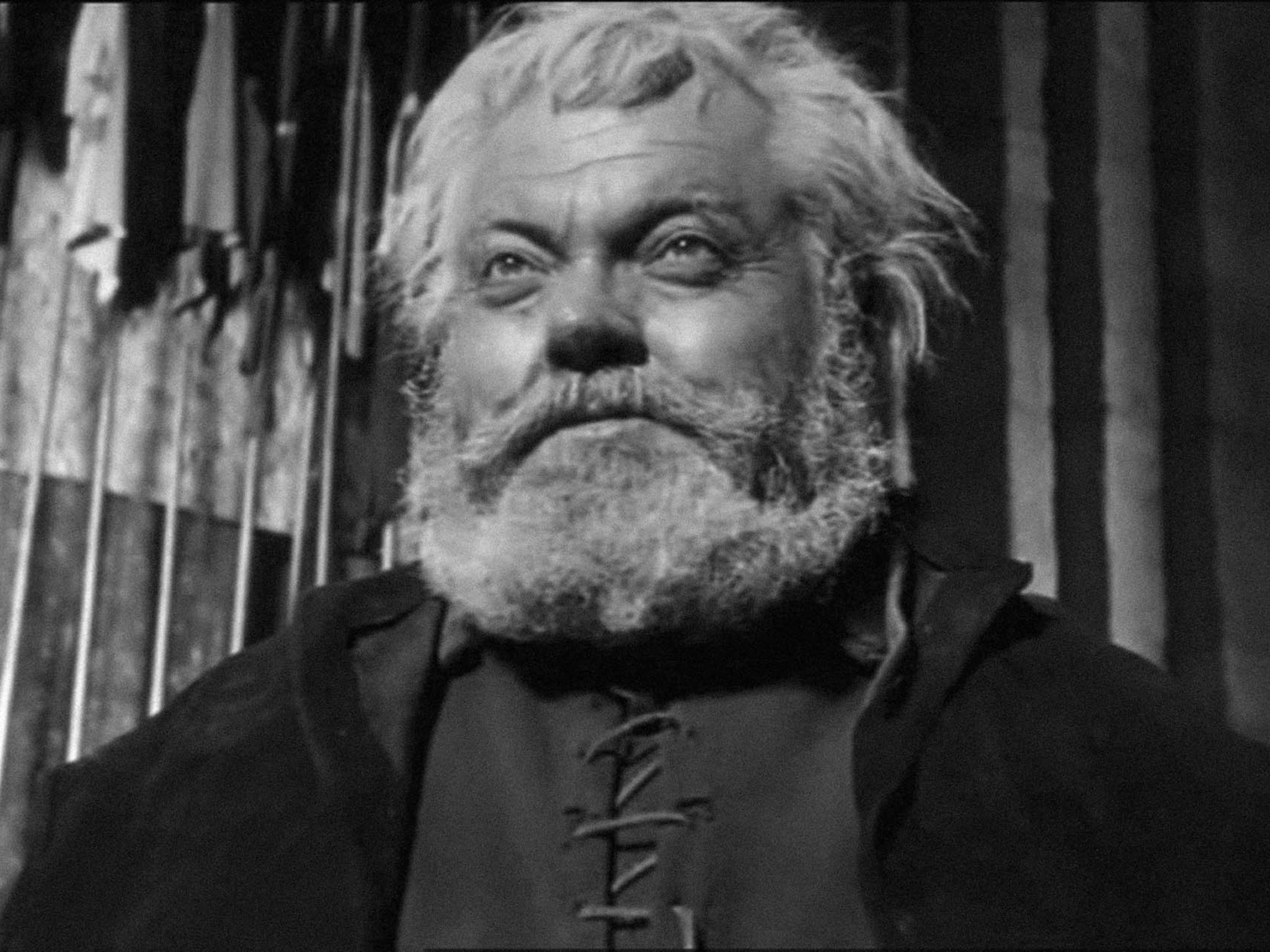
Shall I be frighted when a madman stares? – JULIUS CAESAR, IV iii

All right. Back to this stuff.

death-of-julius-caesar

I’m working on a pronunciation guide/glossary for our production of Julius Caesar and remembering the last time I saw a really effective production. I visited London in 1999 and paid my groundling pound to see it at the Globe. I went in with the same feeling many Americans who went to public school have about it, which is to say I was forced to read it by someone who I can only assume desperately wanted me to hate it because wow was it dull and forbidding.

I’ve since been told that one of the reasons Julius Caesar has been such an academic mainstay for so many years in our Puritan-founded nation (remember them? The ones who closed theatres in the first place?) is that unlike Macbeth, Romeo & Juliet, and just about all of the other biggies, there is zero hanky panky; none of filthy flirting and cheap puns about genitalia that admittedly don’t play as well now as they must have done once but would certainly garner a 14-year-old’s attention more than the two possible allusions to sex in JC: the title character’s cheap dig at his wife’s infertility and Portia’s use of the word “harlot” (though she also says the word “sex”, always a distraction to The Youth even when it means gender as it does in her case). That’s it. No booze-flaccid Porter, no Folger footnote about what “nothing” could occasionally mean. No fun.

But it was what was playing and I wasn’t going to miss seeing a show at this space I couldn’t just walk down the road to every day.* So I saw this traditional (Elizabethan, all-male company, pumpkin-pants-and-toga-pieces) Julius Caesar, set on a bare stage with a bench and a potted fern, with the only modern dress given to the Plebians at the top and around the middle (of the play, not of their wardrobes). And it was fast and it was exciting and there was comedy and there was storytelling and there was an intermission about every thirty minutes and I ate a bag of nuts and leaned my right elbow against downstage left for most of it and I loved it.

And not because of anything they did, but just because of the story, my mind kept banking the play off of the Kenneth Starr madness my own country was enmeshed in, the impeachment of a president not because of any particular policy or ability to govern but because there were people in said government who didn’t like him and who decided character assassination was the best way to distract from what was really happening, which was that they didn’t like not being in charge themselves. Which was causing rather a mess for the people on both sides of that equation who were just trying to live their lives in a country.

Which seemed, you know, Roman. Or Scottish. Or wherever any of about a dozen (minimum) works of Shakespeare take place when their conversations turns toward the unholy mess that follows whenever there’s a non-peaceful transfer of power, regardless of whether it’s a good idea or not.

So look out for a lot of productions of the Histories, of Caesar, Macbeth, Lear, etc., coming up very soon being described both positively and negatively as “political” as if just by telling those stories they had any choice.


*UTTER DIGRESSION: I’m fascinated by all the recent Emma Rice controversy, whether you put the emphasis on the first or the second syllable. People keep asking me my opinion of it as if I’ve ever had the opportunity to see one of her pieces. I live in Kentucky. I have not. In April I did see a little chunk of a rehearsal of this Midsummer that everyone’s so on about and I admit I noticed the amplification and lights and thought, “Oh. That seems to be missing the point of this house.” Not “How dare she swap genders and use modern dress and set pieces”, which surely people are used to by now – though I was in the gallery and the big tree balloon thingies were a definite sightline problem even for the short time I was there – but the insistence on amplifying the actors seemed like kind of a waste. If you can’t be groundbreaking and also acoustic in an acoustically astounding place, then you’re not trying as hard as you think you are. And if amplification is still “groundbreaking” I must have read my calendar wrong this morning. I also couldn’t help but notice that the gender parity that’s such a part of Rice’s mission seemed to involve giving two of the plum female roles to men (one a drag performer, one just male) and letting most of the Mechanicals (though not Bottom) be women, a lateral move at best. I understand that making the fairies sexually ambiguous is a fine choice as is making one of the young couples a pair of same sex (that word again) lovers, but that seems like a choice about story, not about casting parity. I don’t know many women who would trade playing Titania for playing Snug. END OF DIGRESSION.
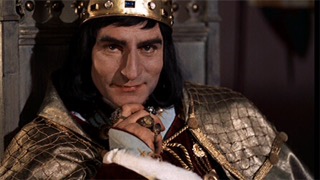
You taught me language and my profit on’t/ Is, I know how to curse. – TEMPEST, I ii

Must go dig out the extra-large thermos. The debate is settled, the sweaters are out, and in the morning, bright and early (though not so early as it could be thanks to the outmoded but welcome tweaks of Daylight Savings), I’ll be teaching a Dealing with Verse in Shakespeare workshop to a bunch of unsuspecting actors. I’m looking forward to it, in part because I love the opportunity to practice my brand of geek evangelism. But like all evangelists, I’ll be in danger of crossing over into zealot territory, try as I might to rein it in.

I am in many ways a terrible, cruel, unfeeling person when it comes to The Good Of The Show; my concern for the emotions and often the needs of others and self almost always comes after TGOTS (or what I diagnose as falling into that category) which sits poorly with my non-confrontational tendencies and my deeply held but spottily obeyed belief that nothing is so important as to really freak out about it. One of these days I’ll figure out how to surf the balance between wielding a Buddhist’s calm and a nun’s knuckle ruler. Probably. Maybe. Back to Stoppard:

          Guildenstern: Do I contradict myself?

          Rosencrantz: I can’t remember.

It happens onstage sometimes, this balance, but less frequently off it. Which is why actors behave the way they do offstage, I expect (insert cocktail emoji), as well as why Chazz Palminteri shot Jennifer Tilly, though I’ve never taken it that far except in my mind. At least once a production, but still.

But since I’ve been digging through Richard II, living with my contradictions is a little less tricky…

          …For no thought is contented. The better sort,

          As thoughts of things Divine, are intermixt

          With scruples, and do set the word it selfe

          Against the word, as thus: ‘Come litle ones’: & then again,

          ‘It is as hard to come, as for a Camell

          To thred the posterne of a Needle’s eye’.

Except that’s not what the Folio says, now that I think of it, what with the “Don’t Say The Name of Our Lord Or Anything Too Sacrilegious On Stage You Repulsive Little Actors”  Puritan Bullshit Act of 1606 making it illegal to say “the word” in the context of “Bible stuff”. No, unlike the 1597 Quarto, the 1623 Folio says, with my emphasis,

         …and do set the Faith it selfe

          Against the Faith: as thus: Come litle ones…

Which someone felt was better (?). Odd that what may be the two most famous lines from Richard II, this and “For [God’s? Heaven’s?] sake let us sit upon the ground…”, are both affected by this.

Also the punctuation’s a little different, as if to remind me to go lightly on the Folio Zealotry mentioned above since the Folio is every bit as inconsistent as the Bible Richard of Bordeaux is musing on about.

Also, Shakespeare’s use of antithesis will figure into the workshop prominently, so the old actor chestnut of setting the word itself against the word is every bit as likely to come up as suiting the action to the word, the word to the action, so .

Also Richard is murderèd about five minutes later, assuming the pace of the Visiting Groom section doesn’t get too melodramatic. So maybe I’m taking the wrong lesson away from here altogether.

Now, where is that thermos?

Screw your courage to the sticking place – MACBETH I vii (and also HAMILTON)

Today I’ve been working on my Stoppard’s Guildenstern lines, ridiculous both in content and in number, as well as continuing to annotate Julius Caesar. I have foreseen, theatre people being what they are, a problem.

That problem is in the fourth scene of the fifth act of Julius Caesar, in which 1st Soldier anticipates the entrance of Marc Antony with the phrase:

          Heere comes the Generall

…which will make everyone break into “Right Hand Man” from Hamilton at the first table read and will never stop backstage until closing. Never. There will be no lull, even during tech. Because, as I said, theatre people are what they are.

The other problem is my own, which is the following exchange from the middle of R&G are D:

          Rosencrantz: (peevish) Never a moment’s peace! In and out, on and off, they’re coming at us from all sides.

          Guildenstern: You’re never satisfied.

For I, too, am a theatre people.

I take heart in knowing that when I’m trying to convince everyone of the vital importance of Folio punctuation during this workshop I’m leading on Sunday (and any other time the subject arises), I can freely use the example from “Take a Break” (which is what I’m really quoting in the post title) in which Angelica notices

          a comma in the middle of a phrase.

          It changed the meaning. Did you intend this?

          One stroke and you’ve consumed my waking days.

And if it’s enough to preoccupy Angelica, it might be taken seriously. Because, as I believe I have noted, theatre people are. What they are.

He that hath missed the princess is a thing/ Too bad for bad report – CYMBELINE, I i

I called the blog Yellowstocking Tales, so I suppose I should tell one.

Back in April, as part of this big 400th anniversary of Shakespeare’s death fanciness we’re now in the midst of, my wife and I were thrilled to be sort of the actor portion of the small (five-person, though really we all ended up acting) Kentucky Shakespeare contingent invited over for the festivities by the Shakespeare Birthplace Trust in Stratford-upon-Avon. We were almost the only non-tourist Americans there, save for a New Orleans brass funeral band. (This is also how, seemingly at random, we ended up here, though I think our popularity with photographers that day had mostly to do with our being nearly the only extravagantly costumed people in the parade on 23 April, as well as the let’s say Visually Shakespearean way my baldness/beardedness played off the resplendent ruff I was given.)

Hereinafter we will call this The Stratford Trip, or, in person, “Oh You See In England”, which is a quite useful preface for any American saying something incredibly precious and pretentious in an American theatre – we started throwing this around before we were even home, this sort of faux I-was-in-Britain-for-four-days-but-somehow-managed-to-absorb-the-terminology-into-my-parlance-sorry-you-may-not-know-all-of-it-actually-basically attitude that I for one still find entertaining. “So when we take the interval – I’m sorry, I mean intermission, You See, In England…”

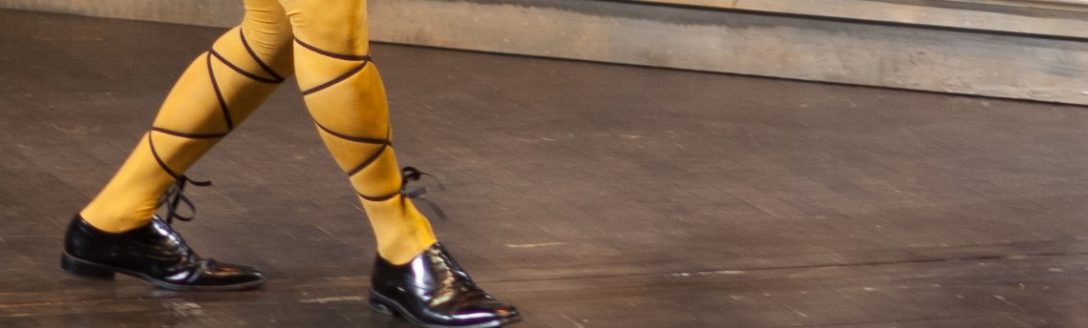
Another thing about that parade – it was likely to be the closest I’ll ever come to being a Disney Princess. In that I was recognized by multiple paradegoers as the character I was portraying, something I didn’t really expect. We weren’t waving from a float or anything; only carrying banners in pairs (“So long lives this, and this gives life to thee.”). But the costume I was wearing had been built for me for a production of Twelfth Night, so I figured I’d wear my yellow stockings and garters with it. We’d be performing at the Birthplace later that day, so I had them along – it wasn’t like I had to run to the Tesco or wherever and grab a pair of extra large men’s tights, bright yellow. Seemed properly festive. I wore Malvolio’s chain of office, too, but that’s more of a footnote detail.

So a little way into the parade, I heard a woman tell what I assume was her granddaughter, “Oh, look, there’s Malvolio. See his yellow stockings?” And yes, we are in Stratford-upon-Avon, where the locals are predisposed to know a touch more about Shakespeare and related lore than your average person on the street and thousands of them are in fact wearing paper Shakespeare masks for a really specific world record attempt (to unsurprisingly creepy effect). Still, I took it as a one-off. By about the fifth person I heard say this, I understood how the college girls playing Belle all summer in Orlando must feel. Except, of course, no autographs; the loving throngs maintained at all times a respectful distance from me, surely out of awe.

Not everyone assumed Malvolio, of course. I was also marching only a few feet behind the couple who has (or, in England, have) been the parade’s Shakespeare for some years. So the true thrill of the odd spectator recognition, if that’s the word I’m after, was “look, dear, it’s Shakespeare and…I guess young Shakespeare.” Very little my hairline and I do is prefaced with “young” so…I’ll take it.

The human mortals want their winter here – MIDSUMMER, II i

It was in the mid-80s Fahrenheit here in Louisville today, and will be again tomorrow. It is All Saint’s Day, the first of November. We broke another heat record, which we’ve done pretty much straight through the summer, which is allegedly over but the year that insists on putting the “ick” in 2016 thinks it can pull a fast one by dragging itself out. Something ain’t right.

There are plenty of people I’ve encountered these last couple of weeks who are just thrilled because they’re, you know, fools. They don’t like sweaters and don’t care about the natural order, which inherently involves sweaters occasionally. Me, I’m with Berowne in Act I, Scene i of Love’s Labours Lost:

          At Christmas I no more desire a Rose,

          Than wish a Snow in Maye’s new fangled showes:

          But like of each thing that in season growes.


I can only assume Mom & Dad are arguing again as they were in the first scene of the second act of A Midsummer Night’s Dream:

          The human mortals want their winter heere,

          No night is now with hymne or caroll blest;


People get all kinds of crazy about this line and what it ought to say, though it seems utterly clear to me and only repeats what Titania says again a few lines later:

          …And through this distemperature, we see

          The seasons alter; hoarèd headed frosts

          Fall in the fresh lap of the crimson Rose,

          And on old Hyem’s chinne and Icie crowne,

          An odorous Chaplet of sweet Sommer buds

          Is as in mockry set. The Spring, the Sommer,

          The childing Autumne, angry Winter change

          Their wonted Liveries, and the mazèd world,

          By their increase, now knowes not which is which;

I’ve kind of always wanted to see a production based around this line – people utterly confused about what the hell season it’s even supposed to be and how we’re supposed to dress. Parkas over Hawaiian shirts. Sudden snow or rain in mid-scene (“Unusual weather we’re havin’, ain’t it?”). No one thinks twice about taking these portents seriously in Julius Caesar or Macbeth, but I seldom see them acknowledged in Midsummer. In fairness, I don’t get to travel much.

          And this same progeny of evills,

          Comes from our debate, from our dissention,

          We are their parents and originall.


(It’s certainly a lot easier to blame it on the domestic dispute (A 273.5 on the scanner) of Oberon and Titania than on ourselves, at any rate.)

I do. I will. – 1 HENRY IV, II iv

Apropos of nothing…

I was watching some of the extras on my recently-acquired Criterion Collection DVD of Orson Welles’s Chimes at Midnight (and let me tell you I have waited so many years to see this in decent shape at last – while I lived in Boston, a print played at my beloved, much-missed Brattle Theatre, but the sound went out about two minutes in; then a couple of years later while I was in Chicago for a few days visiting my then-girlfriend, a VHS copy was acquired from a video store, but I fell sound asleep because we weren’t able to start it until about midnight, then I left town, and it was gone (broken? Stolen?) the next time I returned; I got a decent foreign DVD a couple of years ago which at least allowed me to see it, but this Criterion thing, let me tell you. A beaut’.) – and it occurred to me that the end of Henry IV Part 2  (or Welles’s interpretation, anyway) is in many ways the end of Stella Dallas.


I feel like too much explanation ruins this observation. Go watch them both again. You haven’t seen them?! It’s okay. I’ll wait. You’ll be glad you did.

Ay, no; no, ay–RICHARD II, IV i

Spending a calm day off working on making a Folio edition of Richard II readable by a sane person who doesn’t spend time buried in such details, I’m thinking about the coming Kentucky Shakespeare season, which is at least two-thirds (counting Julius Caesar) about the inevitable violence and crumbling of trust that historically follows a non-peaceful transfer of power. But these are 400-year-old plays and in no way topical. In no way.

Anyway, there’s this line (quoted above) in what’s often called The Deposition Scene or The Abdication Scene or the like. It’s a scene that was illegal during the life of Elizabeth I. When Richard II was first printed in 1597 and 1598 (it was popular enough that it went through three Quarto editions in two years), this scene was not included. We know it was performed at least once illegally, because the acting company was fined for doing so…after being hired to do the uncut version for the Earl of Essex (you know: Errol Flynn) the day before his rebellion against QE.

(There was once a foolish time when even tangential or metaphorical talk about subjects a ruler didn’t want talked about was met with financial reprisals and legal threats. Again, 400-year-old plays. In no way topical. In no way.)

Now after Elizabeth’s death, when James popped down and was just teeming with heirs (more of them than he ever acknowledged, really), this whole succession deal was less of an issue, so the next edition printed the Scene In Question, so we have what we believe to be a more or less intact version of the play now.

In that scene is a lovely weird little moment that can go a couple of ways, both of which work and play well in performance but give you some idea of the trickiness of making decisions while figuring out an edition of one of these scripts. Bullingbroke (who will – spoiler – be King Henry IV in a couple of pages) asks the barely-still-King Richard II:

          Are you contented to resigne the Crowne?

and Richard, in the Folio, responds:

          I, no; no, I: for I must nothing bee:

          Therefore no, no, for I resigne to thee.

It’s important to know that a capital I in the Folio can be either the usual first person singular or, context clues considered, be an affirmative “Ay”. Sometimes it’s tricky to tell which one it should be. So is it “Ay, no; no, ay” – simple unwillingness/inability to make a stand? Is it the earliest recorded example of modern parlance’s eminently meme-able “Yeah, no” and “No, yeah”? Is it the always-in-his-head Richard’s inability to deal with this last chance moment without niggling wordplay?  He’s certainly pretty saucy about it in the rest of the scene.

As the line continues, it’s worth remembering that Elizabethans probably pronounced “nothing” with the long o as if it were the two words “no thing”. So we have the option “Ay, no; (blinks; realizes he’s said something that sounds odd and paradoxical) no ‘I’ – for ‘I’, that thing which is ‘me’ and sounds like an affirmative must without the crown be no thing at all – therefore no ‘no’ for I –meaning ‘ay’, or actually just kidding with that slight pause, I really meant ‘I’ – resign to thee.

I’m not even going to try to explicate all the other possible permutations of how this works, of what it could mean, of how the interplay of the four I/ays and the five no/knows (I didn’t even begin to get into the possibilities of those two – “I know no ‘I’”). It would be exhausting to read and would be dependent upon sound and tiny pauses for emphasis and all kinds of things that don’t work in writing. It’s a booger of a couplet to make happen right, but not so difficult that different Richards can’t make different options of meaning work for them. Let it suffice that I’ve warned you before this stuff has to be at least read aloud if not fully performed/heard.

My choice for this particular bit of the editing process will be to write a blog post about it to clarify my thoughts (check), leave it as it is in the Folio, and wait for the role of Richard to be cast so this can be unpacked in conversation with a single human actor out loud. As it should be.

Myself, I firmly believe lines like this are designed by Shakespeare to make the audience just a little less sad when Richard dies. I know. No. Ay.

…why do you start and seem to fear/ Things that sound so fair?–MACBETH, I iii

Well, we closed Actors Theatre of Louisville’s Macbeth yesterday with a two-show day that began with a 10:00 am matinée, obviously designed to prevent as much of the sentimental melancholy of closing a show as possible – despite which I’m going to indulge in one more bit of silliness before I get back around to the business of learning Stoppard’s Guildenstern and making sensible Folio acting editions of the 2017 Kentucky Shakespeare summer shows. No big whoop.

Said silliness is this Macbeth mix, which has little or nothing to do with our production in particular, but exists generally for my own entertainment. As always, whether title, lyric, or groove inspired a given song’s inclusion is left to my whim.

Playlist:

“Chicken Strut” – The Meters   (“And their dam. And your servants. Jeez. I have said.”)

“Season of the Witch – Donovan   (Self-explanatory)

“Our Day Will Come” – Blossom Dearie   (Could you resist making your fate happen if the sweet voice of Blossom beckoned?)

“The First Cut Is the Deepest” – P.P. Arnold   (The rest of the gashed stabs are easy after you break the seal)

“Promise Her Anything” – Tom Jones   (Again, self-explanatory)

“It Was a Very Good Year” – Della Reese   (Duncan’s dying thoughts)

“What’s Mine is Mine” – The Ray-O-Vacs   (Generally true of these folks, I think)

“Too Much on My Mind” – The Kinks   (Calm down, Mac. Take a nap…)

“Fool’s Paradise” – Rufus featuring Chaka Khan   (…and if you can’t nap, just wonder.)

“What Does a Bad Person Look Like?” – Joe Beard   (For the Children of the Student Matinées)

“Bad Blood” – Neil Sedaka   (The only good thing about bad blood is lettin’ it sliiiide.)

“Hey Porter” – Johnny Cash   (Because.)

“I Wish It Would Rain” – The Cougars   (“Where we lay, our chimneys were blown down…”)

“Superstition” – Stevie Wonder   (Actors. Whaddaya gonna do with ‘em?)

“L’Anarchie Dans L’U.K.” – Pastel Vespa   (Ireland, Scotland & Ireland are cooperating in this play. So, you know: fiction.)

“Cut Your Coat According to Your Size” – Apolos Empire Rhythm Orchestra   (Sage advice as only Afro-Lypso Pidgin Highlife can convey it.)

“Repressed Hostility Blues” – Katie Lee   (“By a queer turn of psych,/ I’m bound to be pleasant to those I dislike.”)

“River Deep, Mountain High” – The 2 of Clubs   (Despite it all, they do love each other.)

“Sleep and Dream” – The Keystoners   (At this point I’m just rubbing it in.)

“Are You Sleeping?” – Davy Jones   (Come ON.)

“Tomorrow” – Jay and the Americans   (Creeps.)

“Trust Your Child, Pt. 1” – Patrizia & Jimmy   (In the end, it’s a play about the next generation.)

“One Tin Soldier (Theme from Billy Jack)” – Winthrop Elementary School, Massachusetts Spring Concert   (As the director kept saying was the message of the play: “Use your words, boys.”)

“Our Day Will Come” – Sharon Tandy   (Reprise.)

“Sleepwalk” – Santo & Johnny   (Stop it. Seriously.)

But we will draw the curtain and show you the picture.–TWELFTH NIGHT, I v

A quickie:

Sometimes you’re just online checking out today’s news about Shakespeare and Marlowe and the Henry VI plays and whatnot when suddenly you see the Reuters picture at the top of the article is of your wife and yourself doing a scene from Twelfth Night on the grounds of Shakespeare’s birthplace. And you say to yourself, “Huh.”

Weird day. Nice gams. Weird day.