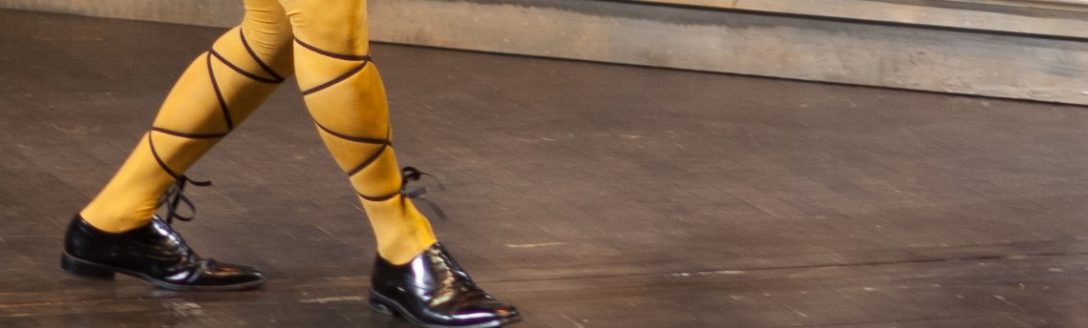
& as I am an honest Puck – A MIDSUMMER NIGHT’S DREAM, V i

This one isn’t even my fault, I swear.

Information you need for this: The Wife and I are playing Beatrice and Benedicke in June; we played Kate and Petruchio together two years ago.

Now, as I’m sure is true of any pair of people who have played those roles, as we prepare there’s great interest on our part in playing up the differences as much as possible. It would be very easy to make each pair more or less fit under the same easy umbrella of Battling-But-Inevitable Lovers and leave it at that. But they’re far more different than they would seem at a casual glance, and one is more than a rough draft of the other, as the oversimplification often goes.

Kate and Petruchio are individually damaged people whose jagged edges, by an accident of fate, fit together like pieces of a jigsaw puzzle. They have little place in society and don’t seem to be interested in having one at all. Their public behavior is awful and no one really likes them. (Petruchio sort of has a friend in Hortensio, but only so much as they are useful to each other.)

Beatrice and Benedicke, however, are generally well-liked – their “merry war” is only with each other. The rest don’t see themselves as victims of their crimes of snark. The Messina gang seems  entertained.

“So they’re Don Rickles,” said The Wife earlier. “Everyone is thrilled to be insulted by them.”

Rickles has been a topic of conversation around our house since his recent passing (I’m surprised I haven’t made her (re-)watch one of my beloved beach movies this week; they are for reasons Rickles and unRickles vital anthropological documents and I will never forsake them), so it’s no surprise that he came up. But I hadn’t thought of B&B in that way until she said something. We had noticed the theme in all the eulogizing by people both mentored and roasted by Rickles: everyone clearly loved and respected him in a deep and sincere way. At least the community he was a big part of certainly did.

And I think she hit on an important way to highlight the differences between the respective Mature Couples in Shrew and Ado: how they are received. B&B are constantly described as “merry” and no one says particularly unkind things about them on any subject except their mutual disdain for each other. Beatrice and her unstoppable Inner Groucho (a problem we share) don’t care what’s being talked about – wiseassery will be on offer. Benedicke’s modus operandi is Scorcesier…

(though that’s not the Scorcese I mean) …and was outlined by the oaf who wrote that “women can’t possibly understand Goodfellas” article a couple of years ago, to his eternal chagrin, I hope. His take on the movie was that of a person whose opinions are of little value, but he does manage to make one accurate diagnosis: busting each other’s chops is a particular feature of male relationships, in the English-speaking world, anyway. The military dudebros visiting Messina give each other hell constantly but don’t seem to mind and in fact egg each other on, until everything goes south when Don John ruins everything (though if the whole of the society we see wasn’t already solidly built from big dry chunks of misogyny he would have to do more than huff/puff to knock it all down; another post).

It will be on us to remember, therefore, while wiping K&P from our memory, that B&B like to crack wise but don’t really habitually belittle anyone but each other and even that is based in a mutual history, not disagreeableness. No one takes them terribly seriously or fears their wrath; they instead enjoy and encourage their wit. The heavy consequences in this play come from other quarters; these two just happen get wrapped up in them.

So that’s our plan. In the midst of a Regency-set Much Ado, we’re going to play Beatrice and Benedicke as Phyllis Diller and Don Rickles, wardrobe and all.* See you there.
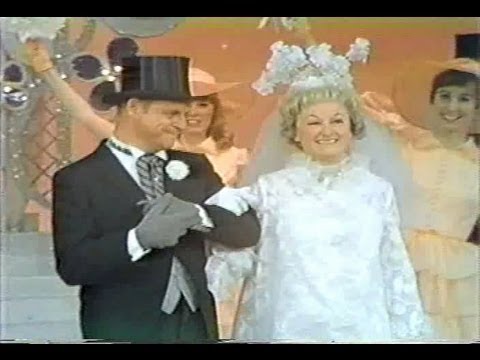
 

* yes, you’re right, she would  have been a great Mistress Quickly, especially with that whole “Master Fang” business in 2 Henry IV.

The rarer action is/In virtue than in vengeance – TEMPEST, V i

This was all going to be a little bit silly, but it’s taken a turn. But let’s begin at the beginning.

A friend was in town a week or so ago for the Humana Festival at Actors Theatre of Louisville and conversation turned to Twelfth Night, a production of which he’s going to be involved in soon. My wife and I hadn’t seen him since the production we were in at the beginning of last year (which inspired the name of this ludicrous little blog), so there was much chatter, eventually turning to the whole “how dark does one play the ending, what with Malvolio being confined and confounded in a little room, do you reckon?” question, about which I have, as is my tendency, Opinions. They were gut opinions, but finally something occurred to me that I think backs them up.

I should first disclose that I am and have, at least since my university years, been sick of the Darkening of the Comedies.. This notion that the Tragedies are the real deal, the Histories are just Tragedies based on true stories (from which most comedy must be tainted/excised) and the Comedies, well, if they are anything but cheap crowd-pleasers, the Christmas Carols* of Shakespeare companies, at least we can overstate their existing darkness whenever possible, and maybe superimpose some extra for good measure, particularly at the very end when we have a chance to leave the audience with a sour stomach for one reason or another. It’ll let people know we’re Serious About All This.

And this was always treated as a profound thought from the Tragedians, worthy of congratulations or at least knowing nods above steepled fingers. “There’s such darkness in the Comedies, you know?” I was, as a lifelong lover of Chaplin’s movies about a starving homeless guy, the Marx Brothers’ insistent, destructive anarchy, the parentless Freudian head cases of Charles M. Schultz, confused. I thought that was the whole deal with comedy, that it Went On Despite, yes? So the battle between “Yes! I too have suffered!” and “Get over yourself; we’ve all suffered!”, between celebrating and mocking our mutual pain, is difficult to take part in when surrounded like the Light (Comedy) Brigade by people who sniff at your “glibness” if you aren’t constantly plunging yourself into the Cimmerian darkness of intangible despair. (That line is for my wife, who will appreciate it.)

But I digress.

We were talking about the end of Twelfth Night and how I fully believe that we aren’t supposed to mind Malvolio’s detention all that much because he is a petty, vindictive martinet with no trace of self-awareness. And I loved playing the guy. That old saw about having to like the character you’re playing in order to get under the skin is the true true; more accurately, you have to acknowledge that in some way you are the character in that in some way you are everybody, so there you are. We are all petty, vindictive martinets with little self-awareness at some time. I’ve been in traffic. And I’m not blind to the paragraphs above that are still unmercifully surly about mere aesthetic differences with people I’ve scarcely seen for twenty years. We’re all a bit Malvolic.

We most of us only suffer it in spells, though, and when Twelfth Night ends we leave Malvolio in the midst of being unmerciful, unforgiving, a crime that Shakespeare never lets slide:

Prospero? Stranded on an island for fifteen years by his brother. What does he do at the play’s end? Forgives him.

Who talks him into it? Ariel…who was enslaved by Prospero (and Sycorax and who knows who else before that). Ariel’s response, by all appearances, when released by Prospero? Forgives him.

Titus Andronicus? Nobody forgives nobody never. And everybody dies HORRIBLY, except the ones left behind to enact more revenge. We just run out of time to watch it all.

Duke Frederick of As You Like It? Random spiritual awakening, and he apologizes for everything – he only sends a note (“My bad; you can have all your stuff back”**), but he does it. No one says, “Not enough! Let’s storm the monastery and stab him!”

Hamlet? So bent on being vengeful that he opts out of killing Claudius in a private room where there’s only the two of them because that just might not condemn his soul to eternal hellfire. And what fun is that? So fifty-three other people have to die and a short-tempered cannon-feeding military dictator comes in to run the show thereafter. Good call.

There are others – Portia does a whole speech about this to Shylock you may have heard of – but that’s plenty.

And Malvolio decides to leave on the note of being “revenged on the whole pack of you”. So he gets what he gets. Which is probably, knowing Olivia, a generous severance package which he’ll still try to sue over because of some bonus he feels he’s owed over and above…somehow the lawyer he hires turns out to be a disguised Feste…it still ends badly. Because he’s a petty, vindictive martinet with no trace of self-awareness.

A detail that kind of slides by people: the whole reason Malvolio is released in Act V is to tell them what happened to the kind sea captain who still has Viola’s clothes; the helpful guy we haven’t seen since the first scene. Seems one of the reasons we haven’t seen him, thrown in as our last reminder of Malvolio’s consistent behavior, is that he was locked up (?!) by Malvolio for some reason no one is even sure of. But yes, let’s get all worried about Mal’s “pain & suffering”.

At any rate, Malvolio and the Maria/Toby/Feste/Fabian contingent are people we’d all rather watch bounce off each other than be around (have I mentioned that this is my favorite of Shakespeare’s plays?), but I can’t pretend any of them are serious offenders even of each other. They’re just childish people, in a turn-of-the-seventeenth-century-Seinfeld sort of way.

Now, how to put these feelings into performance? It isn’t terribly hard to make Malvolio an unrelenting pain in the ass simply by using the text. But some think the last bit of cruel wrongful incarceration on the part of Maria et al. is over the line. (I guess those folks don’t like sea captains.) I figured the best way to keep this in the realm of comedy (bending, not breaking) was to make it about injured pride, not utter madness, so the solution (at which I didn’t arrive until tech, which made me scare the hell out of the stage manager, to whom I apologized profusely) was to exit haughtily after the declaration of vengeance…and step right off the stage, entirely missing the steps into the vom, like an idiot. A couple of characters would snort, I would glare, straighten the skirts of my doublet and re-haughtify myself to exit again. It seemed to work, this gesture stolen directly from Rex Harrison, I later realized.

———

I decided to write all that this morning and had to do other things, but this topic keeps pitbulling the world today and just won’t unlock its jaws.

First we got word from a friend who was some time ago involved in a real, non-fictional tragedy. This friend was rattled after merely using the word “forgiveness” in discussing ways people have dealt with such tragedies in the past resulted in a verbal attack; apparently that vicious suggestion of “forgiveness” disrespects the grief of others…which, knowing this friend (and I’d have the same reaction) will be the cause of a roiling stomach precisely because of the evident pain of the person who decided to lash out at the suggestion of maintaining humanity in the face of tragedy, as if that suggestion was a mere passive/aggressive implication that said lasher-out hadn’t been forgiving enough. But I’m trying to universalize and instead I’m vaguebooking. Sorry.

Also, the verdict on the Charleston white-supremacy terrorist murders came down just a little while ago, which I am neither eloquent nor wise enough to try to summarize the facts of here, much less my own feelings, but there’s a conversation going on within many feeds and timelines and households and newsrooms right now about justice and forgiveness and how those things work.

And that conversation always brings me around to Ariel again, Ariel who (which?) is both non-human and fictional and who suggests that if Prospero were even to look upon the confusion he’s caused his enemies, “your affections/ Would become tender.” Prospero responds, “Dost thou thinke so, Spirit?”

And Ariel says (bearing in mind our distance from Jacobean spelling), “Mine would, Sir, were I humane.”

Usually this is modernized to “human” but it could still be “humane”. And ideally they’d be synonyms anyway.

All this makes Prospero realize that, as stated in this post’s title, “the rarer Action is/ In vertue, than in vengeance,” and it’s worth saying here that “rarer” in that era could be taken to mean not just uncommon, but also good, uncommonly good. Which is even better than humane***.

———

It’s been a long day; it’s been a long post. I am not a fan of his work, so my earlier plan was to quote Don Henley with ironic sarcasm and note that in trying to get down to the heart of the matter, I’ve reached the conclusion that I think it’s about forgiveness. Forgiveness.

But the world has blown my stock of irony today and I’d have to admit that the quotation works better without it and I’d just feel like a jerk. Not a Malvolio-level jerk, but still.

* I freaking love A Christmas Carol, for the record; it’s about generosity of spirit, which will be relevant shortly, if it can ever be said that it’s not relevant.

** paraphrase

*** tonally this is a weird place to note that today, 10 April 2017, is the incept date of replicant Leon Kowalski in Blade Runner. There’s an Ariel/Caliban streak in the replicants, but that’s probably obvious enough not to require a whole post. #MoreHumaneThanHumane

…like an old cuckold with horns on his head… – MUCH ADO ABOUT NOTHING, II i

Mixed feelings is what I’ve got here. One the one hand, I’m always thrilled at the possibility that a word that’s fallen into disuse over the last century or four may make a comeback and as a by-product reduce the conversational obscurity of some Shakespeare here and there. On the other hand, it would have to be “cuckold”, which the lazier misogynists of our century (I should cut them some slack on the laziness, though – they’re getting a lot of heavy misogyny accomplished, if “accomplished” is the word I’m after here) can’t even type out in full but shorten to “cuck”.

It’s also likely that 70-85% of them don’t know what it means exactly but just heard it used as an insult somewhere; sadly for them, they don’t realize they’d have extra characters with which to harass the sensible on Twitter if they knocked it from four letters down to one emoji: horns.

There’s your frowning purple devil, your bull, and your kind-of-Christmassy circular bugle with a ribbon on it that…someone thought we needed an emoji for…I guess. Regardless. They’d just use those three extra characters to misspell something anyway.

The derivation of “cuckold” from “cuckoo” is easy enough, what with the laying of eggs in other birds’ nests and all, but no one is really sure about the whole “a cuckold has horns” derivation, though I’ve heard theories ranging from:

Zeus-and-Europa (which doesn’t really make sense, unless you-the-cuckold are a different, actual bull that was planning to run off with a human woman?) to…

the Minotaur’s parentage (which makes a lot more sense and is high on the list of sensible cuckold origins but still King Minos the cuckold is literally the only being without real or fake horns in the situation) to…

something about Roman soldiers successful in battle being awarded horns (but often returning to a straying wife or a Dear Iohannes scroll) all the way down to…

somehow anti-Semitism (one of, to me, the weirdest translational misunderstandings in the Bible – Et tu, Michelangelo?).

My favorite, and the one that feels both the most proverbial and the most rural, which makes it ring truer, is the simple notion that a Bull Can’t See His Own Horns, nor can a cuckold his own humiliated situation.

No matter the origin, if the word is going to return, I do wish the horn-based implications would return with it. We’re doing Much Ado About Nothing and I feel like half the lines in the play are about horns but The C-Word is spoken only once, so a sense that more of the audience would be able to chuckle mildly at the references without some sort of footnote supertitles would be nice.

One of my favorite of the play’s many, many, I-refuse-to-sit-and-count-them-all-because-there-are-dozens-in-Much-Ado-alone, convoluted ways of expressing the whole idea is Benedicke’s pronouncement that he will not “have a rechate winded in my forehead”. A recheat (modern spelling) is a hunting call to bring the hounds back when they’ve lost track of the game. Short-I “winded” in the sense of “wind blown through”. So he would rather have his own personal cuckold horns hollowed out and blown into while they’re still on his head, with the further implication that doing so would, since he’s the Prey in any marriage scenario, be calling the dogs back to find him. Layers. This is why I’m sad these jokes play only in, what, Anglophile foxhunting communities or in places like Portugal and Italy where people still recognize an age-old language of rude gestures that includes the useful “finger horns at the temples” (cf., this from the BBC).

But we’re in America. There are only maybe five or six good derisive hand gestures, and I’m fairly certain nose-thumbing is the only one we could get by with – it’s a family crowd. Feh – and they call ours a digital age.

…High on a stage to be placed to the view. – HAMLET, V ii

One of the exciting things about this summer in the park with Kentucky Shakespeare is the new stage, which will make its debut during a season that includes Julius Caesar, generally thought to be among the first (if not the first) plays used to open the Globe in the 1590s. As a lover of direct audience address, its opening lines (“Hence: home you idle Creatures, get you home”) entertain me greatly. It’s one thing to speak to the crowd and another to have the confidence to tweak them for playing hooky from work to come to your show at all. which, statistically, a good chunk of them were.

17834129_10155265931289434_1518812713335536890_o

Now, for proper direct audience address, it’s nice to be able to get as close as possible to people, for which purpose the old stage had a rake. Unfortunately the raked stage facing one way and the raked seating the other meant one could only land about halfway down the rake before starting to disappear from the view of the people at the rear. So on the new stage, the dimensions are the same but the rake is gone; I was bummed about that at first until I realized this meant I could get even closer to the front row than I was able to before and still be seen back at the bar and the food trucks.

Another change is the stage house, which was lovely and modified-Elizabethan and all but was also pushing thirty, has had hours to ripe and ripe outside in the Ohio Valley, and has moved on to the hours where it rots and rots. The noisy planks one waited on to enter above were past Rustic and only pausing at Dispiriting on the hill down towards Decrepit. Now there’s to be an annual temporary set piece to give us the levels we require without allowing them to bake and freeze in alternation.

Back in November, I think it was, the stage house was pulled down – well, some bolts were loosened and then a bunch of us blew on it really hard – in preparation. Some of it was used in our (indoor) Rosencrantz & Guildenstern Are Dead in January to make a skewed version of what had been our Hamlet stage a couple of seasons before.

Now, I’ve seen a lot of fine work done on that stage, and I’ve seen some of  the worst (so the exact track record of every stage in history). I’ve done a couple of things I was proud of there, and I’ve chewed mercilessly on that delicately seasoned wood, which tastes more like ham than chicken. But the day of helping to tear it down was less nostalgic than I expected it to be on the whole, probably because it was so clearly a preparation for building it up more sturdily than it had been in a while. [Insert poignant metaphor for the last few seasons at the park here.] Also, as long as we’re facing the right way and we’re high enough to be seen, we have some solid words to bellow out there, so whether the beams are old are new is moot, in my eyes.

Anyway, a new playground is always welcome. And now I have very little idea what the pulpit at Caesar’s funeral (spoiler) will look like or how high up Richard II will be when says “we [royal we] will descend”, which is fun after some time of being able to guess where things would land.

I’ll see a floor plan in a couple of weeks, May 1, when rehearsals begin. You’re welcome to come to the park and watch the new set come together, of course. It’s free, and the weather is lovely this time of year…

17807525_10155265931454434_5981200635864138466_o

…the infernal Atë in good apparel… – MUCH ADO ABOUT NOTHING, II i

I’m evermore intrigued by the accidental overlaps among these plays that make up our seasons. Any plays, any seasons, any company really. And it isn’t the obvious big “well clearly the girl-in-boy-clothes plot element is worth it again” or “usurpers are doomed from the get-go” overlaps. I like the tiny ones.

Atë, for example.

Atë is the Greek goddess of (depending on your sources) mischief, delusion, ruin, folly, blind folly, infatuation, rash action and reckless impulse. Her m.o.is talking people (and gods) into doing dumb things without thinking about them first, which is clearly how Mischief (not as strong a word to us as it was for Shakespeare, or even Sondheim) and Ruin work.

I’m very fond of Atë’s literal way of achieving this, according to Homer: after she was banished from Olympus for talking Zeus into doing something stupid – because he really needed her help on that front – “her feet are delicate* and they step not on the firm earth, but she walks the air above men’s heads and leads them astray”, addling their brains with her occasional footfalls on their brainpans. For the gods, she has to smooth-talk. For mortals, a noggin jostle is all she needs, though in other non-Homeric versions, there’s always smooth talk.

Atë could for this reason very well be the patron goddess of nearly every worthwhile character in Shakespeare. My constant argument for picking up the pace when acting Shakespeare, besides my trust in the human ear’s ability to get what’s going on when it’s provided with something worth hearing, is that if these people stopped to think about what they were saying/doing, they’d never do it. They spend most of their time dealing with repercussions caused by sudden, thoughtless, impulsive behavior.

The nice thing about this is that it makes them easier to forgive. When dealing with a Lear, a Leontes, several of the historical kings, anyone in a comedy, we have to like them or at least forgive them for their rashness at some point. If they go getting all pause-y and deliberate in the awful stuff they spit out during Act I (and as an actor, it can be very tempting to bite off some of these words with cold-blooded Sam-Jacksonorousness), we don’t care if they’re sad or if they’re dead in Act V. If Leonato or Lord Capulet slow down to make hateful pronouncements about their daughters, we close the iron door on them forever and label them as terrible parents and terrible human beings; if they fly off the handle in a weak moment, well, we, too, have flown off the handle now and then. We’re given some space to empathize with their regret.

The main difference, for a person hearing it all happen, is pacing. Both in the sense of speed, and in the sense of Atë walking back and forth on your head.

I bring her up at all because when preparing the summer editions, I noticed she came up twice: once when Benedicke, as quoted above, says of Beatrice (not present at the time):

          come, talke not of her, you shall find her the infernall Atë in good apparell…

And then up she pops again as Mark Antony predicts to Caesar’s corpse, that bleeding piece of former boss, that:

          Caesar’s Spirit, ranging for Revenge,

          With Atë by his side, come hot from Hell,

          Shall in these Confines, with a Monarke’s voyce,

          Cry ‘Havocke’, and let slip the Dogges of Warre,

          That this foule deede, shall smell above the earth

          With Carrion men, groaning for Buriall.

Tony is a little more vehement about things than Benedicke, which, considering the context, I’ll allow. Though I suppose since our audience this summer will have seen Much Ado a few weeks before Caesar, he could easily complete the transference and say “With Beatrice by his side, come hot from Hell”. Except she doesn’t go to Hell – just stops off there to deliver her apes.

But that’s another footnote.


*elsewhere Homer says she “is strong and sound on her feet”, which is probably because she’s so delicate with them, not touching the ground and all.

…but not gone – JULIUS CAESAR, III i

I don’t know what kind of self-respecting Shakespeare blog doesn’t manage a post on the Ides of March, but then I don’t know what sensible actor/dramaturg of Shakespeare schedules a minor medical test on the Ides of March either (all is well).


In all my excitement about the whole Benedicke thing I get to enjoy this summer, I’ve only begun to get excited about Caska. Also to notice the historical Servilius Caska had a kind of young-Chris Elliott vibe going.

Caska is the cranky-ass conspirator who, by leaping forth with his dagger (“Speak hands for me!”) and getting the ball rolling by getting Caesar in the neck*, enacts the political assassination equivalent of being the online commenter who types “FIRST!!!1!” (He also joined the civil war and is believed to have died in the wave of good ol’ Roman soldier ritual honor suicides that was going around toward the end of that same war. No big scene for Caska, though – it’s the so-called Stoic who gets a big emotional dramatic moment. But no hard feelings.)

With all due apologies and promise of safety to the fellow actor playing Caesar this summer (he’s also Bullingbrooke; perhaps a “you win some, you lose some” tattoo is in order for him), I am really looking forward to taking part in the mild therapy of that moment, in no small part because I, like you, have had my share of terrible bosses.

The one who groused when I asked to leave my mall retail shift early when I got a call asking me to go to my grandmother’s deathbed…and then asked if I had an estimation of when I’d be back.

A couple of college professors who would frankly be lucky to meet with a Pompey’s Porch ending and not the Suddenly, Last Summer situation likely after any reasonable polling of their students.

A director of Shakespeare I may have mentioned in this space before.

The person(s) responsible for the geographic placement of an arena which sits now in one of if not the worst possible site for that purpose here in Louisville.

I’m sure there are more I just can’t think of right now or for legal reasons should not speak of. More or less all the usual suspects as described in The Frantics’ 80’s comedy classic, “Boot to the Head”.

*It is generally believed that “to get it in the neck” didn’t appear until the mid-1800’s as a slang term for being the victim of literal or figurative mayhem, but I like to think it started with Caska. Though it was best framed by one of my personal favorites among the Classical philosophers, Bertram Wilberforce Wooster, ca. 1923:

It seemed to me that everything was absolutely for the best in the best of all possible worlds. But have you ever noticed a rummy thing about life? I mean the way something always comes along to give it to you in the neck at the very moment when you’re feeling the most braced about things in general. No sooner had I dried the old limbs and shoved on the suiting and toddled into the sitting-room than the blow fell.

My grief lies onward and my joy behind* – SONNET 50


*

Because the scripts are finished at last.

I mean, they’re not printed or hole-punched or anything; that’s not my department.

But all the punctuation is bolded so as to be unavoidable and therefore dealt with. Period spelling is retained except where it was guaranteed to cause more harm than help. Judicious trimming has been done out of respect for our airplane-, siren-, darkness-, beersale-heavy urban surroundings, as well as the basic health of a group of actors who will have to do all three shows consecutively one afternoon/night in July (the racist parts are gone too – “Ethiope” hasn’t aged well, Mr. S.). Every expurgated “God” has been reinstated where the Folio was legally forced put “Heaven” in Richard II. Tiny histories of the individuals Shakespeare adhered to the biographies of when it was dramatically expedient. Every i dotted, and in some cases turned into a j.

And, this year, notes. So many notes. Notes that shouldn’t be overwhelming to have on hand, but were a little overwhelming to compile. Notes that I hope no one takes as insulting because you never know what words a person has come across or never had to say aloud or what a definition or paraphrase for clarity is going to trigger when learning lines and seeking to grok the situations in which the lines are spoken. And some are just thoughts about the bigger WTF moments: the “Leonato had a silent wife?” (solution: cut); the “who the hell is Woodstock, exactly” issue hanging over our heads (solution: prologue); and that whole thing with Portia’s “voluntary wound” in the thigh (solution: hope for the best).

Plus a few of those fancy “circles” from Ben & David Crystal’s Shakespeare’s Words book/site. I love those.

Which all means I can at last stop poring over every single line in three plays and start working on just those for which I’m responsible, lest I be embarrassingly bad on stage.

Always a concern. And if you’ve seen me on stage, a legitimate one.


gif by EditingAndLayout

Woe is forerun with woe – RICHARD II, III, iv

I didn’t sit down to write this because of International Women’s Day or the attached Day Without a Woman, but it’s at the very least standing in the corner of this post, arms crossed, tapping its toe.

I’ve finally hit roughly the midpoint of annotating Richard II for this summer’s Kentucky Shakespeare production. This one is a little denser than some, probably because of it’s being 100% verse and all. We’re up to the Gardener Scene.

But it’s not really his scene – it’s also the closest thing to a tiny almost-Bechdel moment we have, and even it’s a definite almost-. It opens with two Ladies and the Queen.

Now, there are those who call her Isabel because that’s who Richard was married to in 1399, but the stage directions only ever call her “Queene”.

You see, Isabel was his second wife, about ten years old at the time. (Before you get creeped out, I should note that Richard, in his early thirties, married her to secure a peace with France. Still sketchy to us, but in the 1390s, not particularly shocking.)  His relationship with his late first wife, Anne of Bohemia, was famously (in Holinshed, at least, as well as Woodstock, the anonymous play to which this one is a sort-of sequel) happy and romantic and devoted and such. At least so it is said.

This is why I’m resistant calling her Isabel. A lot of characters and places and time-spans are conflated in the Shakespeare’s histories. What’s one more?

Anyway, the Queen is a lovely role, but is unsurprisingly tiny – her husband has 758 lines, she has about 115. But pound for pound, she holds her own.

I should admit to a professional sexism here: it’s my job to trim these plays judiciously for our summer seasons, but in the interests of parity when paring, the men often get sliced without mercy and if possible I don’t touch the women’s lines at all. I don’t know that that’s a uniformly good thing (I’m still worried that leaving Hermione almost entirely intact last year despite everyone else’s trims gave her more social power than she evidently had and skewed a play that already literally idolized her, but I’m going to screw this up one way or another so it might as well be that way). But there it is.

So this summer we’ll be hearing from the Queen(e) and attendant Ladies about bowling and whatnot because dammit they barely have a scene, let’s let them have their whole scene. III iv is already so concise that to cut the distractions her waiting-gentlewomen attempt before she gives in (well, again, almost-) to grief would be lumpy anyway.

So, bowling, dancing, singing, grief:

          Lady:       Madame, I’ll sing.

          Queene‘Tis well that thou hast cause:

                          But thou should’st please me better, would’st thou weepe.

          Lady:      I could weepe, Madame, would it doe you good.

          QueeneAnd I could sing, would weeping doe me good,

                          And never borrow any Teare of thee.

(See? Lovely.) And then Men approach. A Gardener and his two assistants. And out rang the lines that like so much of this play resonated as if sung by the Heavenly Choir of Weighty Current Events. For our Queen sayeth:

          But stay, here comes the Gardiners,

                      (alright not that line so much; wait for it)

          Let’s step into the shadow of these Trees.

          My wretchednesse, unto a Rowe of Pins,  

                      (a little obscure, but I love this: roughly translates as “I’ll bet my sorry state against a row of (proverbially worthless) sewing pins”)

          They’le talke of State:

                      (of COURSE she wants to hide in the trees – no sane person really looks forward to talking politics with strangers, internet be damned.)

                                                    for every one doth so,

          Against a Change;

                      (again, she hits it on the head: the day’s big story is the day’s big story and it takes some skill to distract people from it coughcough. Then comes the kicker.)

                                           Woe is fore-runne with Woe.

Now, I was peeking through the Arden edition’s notes, usually reliable and always plentiful, and it suggests this could be restated “Gloomy happenings (in politics) are heralded by gloomy predictions.” Which works in a way, I suppose, but seems so specific, especially when coming from a person who has been discussing her reasons for woefulness just before. And, yes, she’s queen, so her woes will always have politics attached to them, but they’ll always be personal, too.

It’s that “fore-runne” that does it for me. “When it rains, it pours” is all very well, but the image of one Woe running in front of another, either as herald to something worse or just because these Woes of hers are racing and one is a bit faster than the other (the OED backs up both of these options) is a far piece stronger than any handy clichés. The Queen can talk, is what I’m saying, and talk well.

So while absolutely nothing happens in this scene that is essential to the plot, you’ll have to pry it from my cold, dead hands.*

Enough ravings. On to Act Four.


*no one has for a moment suggested I should cut any of the scene; whether this is because all right-thinking people agree or they fear the twitchy eye I might get from it is anybody’s guess.

Never came trouble to my house… – MUCH ADO ABOUT NOTHING, I i

After two solid weeks of travel which involved no small amount of crashing in the houses of kind friends and family, and weather fluctuations from blizzard to unpleasantly warm 75 degrees (in February? In Massachusetts?! We broke it; sorry, kids), I’m at last in the range of 66-75% done with annotating the summer scripts for Kentucky Shakespeare and, as always, primed for self-distraction. My mind is a wanderer. This time I can at least trace the path:

– The Wife and I are thrilled to be able to say out loud now that we’re taking on Beatrice and Benedick this summer (come on down; we guarantee a good time);

-the only time we’ve approached these roles before was in a reading of Davenant’s The Law Against Lovers, his 1662 adaptation/squishing-together of Measure for Measure and Much Ado About Nothing, a weird little thing that I can see the reasons for, MfM being such a dark piece except for the randy people, who quickly became socially inappropriate for squeamish theatregoers. There’s a company in Louisville, Savage Rose, that alongside its regular season hosts readings of such under-heard classics as this and has for years now. Lots of fun to partake of.

-this squishing-together of Much Ado and some other thing popped into my head during the Much Ado editorial process (which I’m still during-ing and instead of finishing, writing this) when I came across two exchanges, one spurring a notion, the other cementing it. Hear me out…

Act One, Scene One. Soldiers show up looking to crash on the abundant sofa of Leonato and the Prince who leads them enters and says to his host:

          Good Signior Leonato, you are come to meet your trouble: the fashion of the world is to avoid cost, and you encounter it.

To which Leonato replies:

          Never came trouble to my house in the likeness of your grace.

Innocuous host-/guest- flattery. But it reminded me of a similar situation in a slightly less wacky play in which royalty shows up at a crashpad to declaim:

          The Love that followes us, sometime is our trouble,

          Which still we thank as Love. Herein I teach you,

          How you shall bid God-eyld us for your paines,

          And thanke us for your trouble.

And the hostess (Lady M., if you haven’t recognized Duncan’s howdy by now) responds:         

          All our service,

          In every point twice done, and then done double,

          Were poore, and single Businesse, to contend

          Against those Honors deepe, and broad,

          Wherewith your Majestie loades our House…

…and so on, fancier and more versified than Leonato (King vs. Prince and acquaintance vs. spouse’s boss certainly comes into play here), but substantially the same thing. So what happens…

…if we replace Don Pedro with Duncan…

…and leave in Leonato’s silent wife. I should explain.

In the Folio/Quarto, Leonato has a wife, Innogen, mentioned only in two stage directions in the first part of the play that call for her to enter. She has no lines and is only referred to barely in one of those “Is this your kid?” “Well, her mother says she’s mine, heh heh” bits of banter that reappear with variations in a couple of the plays. In almost all productions, she’s taken as a “ghost character” (one who is named in stage directions or Dramatis Personae but never speaks) and just written out, seeing as how actors expect to be paid and all. What if she stuck around, this silent hostess, and…

“But”, I thought, “that’s silly. Get back to work.” Which I did.

So on I went, annotating this for understanding and slightly modernizing the spelling of that for clarity and removing the odd anti-Semitic remark for crying out loud. And on another pass of the same scene, but a few dozen lines later, the Prince returned with:

          …in the meane time, good Signior Benedicke, repaire to Leonatoe’s, commend me to him, and tell him I will not faile him at supper, for indeede he hath made great preparation.

And thought I had heard such an oath to be there in time for supper before; that’s right:

          To night we hold a solemne Supper sir,

          And I’ll request your presence.

To which Banquo replies:

          Let your Highnesse

          Command upon me, to the which my duties

          Are with a most indissoluble tye

          For ever knit.

That dinner ends even worse than Hero’s first wedding, but there’s a history of thrift in Shakespeare when it comes to using funeral food for weddings, so vice versa seems legit, non?

Which brought me back to Innogen. What if we gave her some lines…made her a more complicated hostess…

…assume the comedy is either simultaneous to the tragedy or – no, wait…

…is a backstory for it…they’re soldiers after all…

…squeeze Benedick/Beatrice together with the title couple of That Other One…

…ditto the younger lovers and the Macduffs…

“But”, I thought, “that’s silly. Get back to work.” Which I did.

…as magnanimous as Agamemnon… – HENRY V, III vi

The first of March is St. Davy’s Day, and my Monmouth cap is ready for a leek.

I made it myself – the cap, not the leek – out of New Hampshire sheep’s wool from a pattern someone retrofigured from a several-hundred-year-old knit Monmouth hat that still exists in a museum somewhere. It’s sort of bell-shaped and has a nifty little lanyard loop meant, I’m led to understand, to allow for hanging on the hilt of one’s sword when the situation requires or permits an exposed pate.

10519725_10152563078054434_6871718327834745470_o

It’s also a perfect mechanism from which to dangle a huge leek.

I’m not Welsh in any way I’m aware of, though I do think dragons and Tom Jones are neat. And Kentucky is coal country, too – it’s in the water here, which doesn’t seem to upset as many people as it should. But a few years ago a director (with a cruel streak I hadn’t suspected in her) decided to cast me as Captain Fluellen in Henry V.

He quickly became one of my favorite Surprise Roles, that is to say a role I had no particular opinion of one way or another before taking it on. I was playing Bottom that summer, which had been a dream for some time, as well as Polonius (too young, really, but if the baldness broadens my casting possibilities, then bald I shall be), who was fun, but requires some tricky juggling, what with the oafish-yet-controlling-yet-relatable-enough-that-you-don’t-necessarily-want-him-dead notes to be hit.

Fluellen was just…the thing I had to do in the other play of the repertory season. The slight relaxation between two larger roles. No one told me he was the best part in the show (in that people are always happy to see you arrive, but you don’t have to memorize/put over any famous speeches). I suppose I should have, as should we all, listened to the wisdom of Good Tickle Brain whose favorite male Shakespeare character is none other than Our Mighty Welshman. He’s steadfast, well-read, a dedicated Harry P(lantagenet) fanboy. Perhaps a little too by-the-book, but in wartime that’s maybe a good thing. No, he can’t answer a simple question with brevity, but neither can I. I mean, I’m writing this and exactly zero people have even asked for it. I suspect that number will drop once this is posted.

Now, I’m an American, so I don’t have any particular grip on Welsh-ness, whether typical or stereotypical, beyond those few I may have encountered via Harry Secombe on my beloved Goon Show. (Though I understand even Disney partakes of Welsh festivities nowadays…)

But ignorance is no excuse for not doing your acting homework, so I set out on the steep uphill journey that was figuring out a Welsh accent. And I can now hear and identify the active sounds and cadences that make for a Welsh accent. Whether I managed to issue any forth from my mouth in an effective way is another story.

The important thing, though, was that my attempts at that accent at least gave me a glimpse into something important about the role that an American not attempting the accent might not have given me: the role is the accent. By which I mean, if you’re writing for Elmer Fudd, you throw in as many r-laden words as you can; for Sylvester the Cat, it’s s-words.

And for a bombastic Welsh captain, you deliberately write something like:

          The Duke of Exeter is as magnanimous as Agamemnon, and a man that I love and honour with my soule, and my heart, and my dutie, and my life, and my living, and my uttermost power.

          He is not, God be praysed and blessed, any hurt in the World, but keepes the Bridge most valiantly, with excellent discipline.

And the poor sap who has to say it all has to establish him as a bit of a blatherer right away (Bottom, Fluellen, and Polonius in one summer; talk about typecasting) while also making sure to say Dook while everyone else says Dyook, hisses the esses a bit, adds an extra schwa-ish vowel between double consonants like gn, mn, tt, and makes that lovelee Welsh long ee sound even within diphthongs. So it comes out something like:

          The Dook of Ek-seh-teh iss …(lag while he chooses a word, which also makes Gower and the audience think he might simply answer the question “Is the Duke of Exeter safe?”)…ass magananimous ass Agamemenon, and a man that I luff and on-nuh with my soul, and my haat, and my doo-tee, and my laeef, and my lif-fing and my ut-tah-most pah-weh.

Oy. Or rather, Cod pee praissed and plesst. The entire text of the role reads like a oral exam of a “recognizing the signature sounds of a Welsh accent” course, down to the very phonetic spelling of “Llewellyn”. Which, it being primarily a comic role, though not really a foolish one, isn’t a worry. Finding the jokes is a vital part of Fluellen, and the language and how you say it is Where the Jokes Are. Plus spitting all the hell over my Gower, which was a hoot, for me anyway. I don’t think she caught anything communicable from me.

There’s also the cadence, which is, again, to American ears, not far off from a broad Subcontinental accent, which made me wonder what similarities between the Hindi and Welsh languages would make native speakers sing so similarly when speaking English. I never found an answer.

Somehow I doubt anyone noticed any of this homework, though, because the note Fluellen leaves on is all anyone remembers – being, of course, the scene in which I forced a man to eat a raw leek onstage, which in our production was doubled down on when I a) obeyed the stage direction “strikes him” by doing so with the flappy green bits of said leek, b) leaned into the bawdy fun of getting uncomfortably close to his face with my crotch when saying “or I have another leek in my pocket which you shall eat” and c) took a giant and spiteful bite of the thing myself just before exiting – “…and heal your pate.” [crunch]. Me and my big dumb comedy notions. I swear I can still taste it sometimes when the wind is right.

But the crux of this wonderful, loquacious fellow was, for me, in his little exchange with Gower the night before the battle, quoted in full:

          Gower: Captaine Fluellen.

          Fluellen: ‘So, in the Name of Jesu Christ, speake fewer: it is the greatest admiration in the universall World, when

          the true and aunchient Prerogatifes and Lawes of the Warres is not kept: if you would take the paines but to

          examine the Warres of Pompey the Great, you shall finde, I warrant you, that there is no tiddle tadle nor pibble ba-

          ble in Pompeye’s Campe: I warrant you, you shall finde the Ceremonies of the Warres, and the Cares of it, and

          the Formes of it, and the Sobrietie of it, and the Modestie of it, to be otherwise.

          Gower: Why the Enemie is lowd, you heare him all Night.

          Fluellen: If the Enemie is an Asse and a Foole, and a prating Coxcombe; is it meet, thinke you, that wee should

          also, looke you, be an Asse and a Foole, and a prating Coxcombe, in your owne conscience now?

          Gower: I will speake lower.

          Fluellen: I pray you, and beseech you, that you will.

There he is. Don’t doubt for a minute he salivates all over Gower as he stage-whispers this warning, and yes, the obvious joke is the long-winded admonition not to talk, along with the singular opportunity to say “tit-tle tat-tle and pip-ple pap-ple” onstage, but the matter contained in that long-windedness is everything I love about the guy. Gower has, to Fluellen, not only shown a lack of basic and sensible self-preservation but has insulted his own training and the very tradition of soldiering, its ceremonies/cares/forms/sobrieties/modesties. If the French army jumped off a pridge, would you? He loves his job in every detail, and what with there being no standing army back then, he has to relish every moment of it.

But enough of this. Back to your happy St. Davy’s Day. Wear the leek in your Monmouth with pride and if mocked by swelling turkey-cocks, let them eat it.